Contrast Pools
& Hydro-Massage
The precise physiological shock of cold water entering a heat-primed body is one of the most powerful recovery stimuli in sports science. At Maji, we have engineered the complete contrast arc — cold plunge, hot immersion, and Jacuzzi hydro-massage — as a continuous vascular recovery sequence.
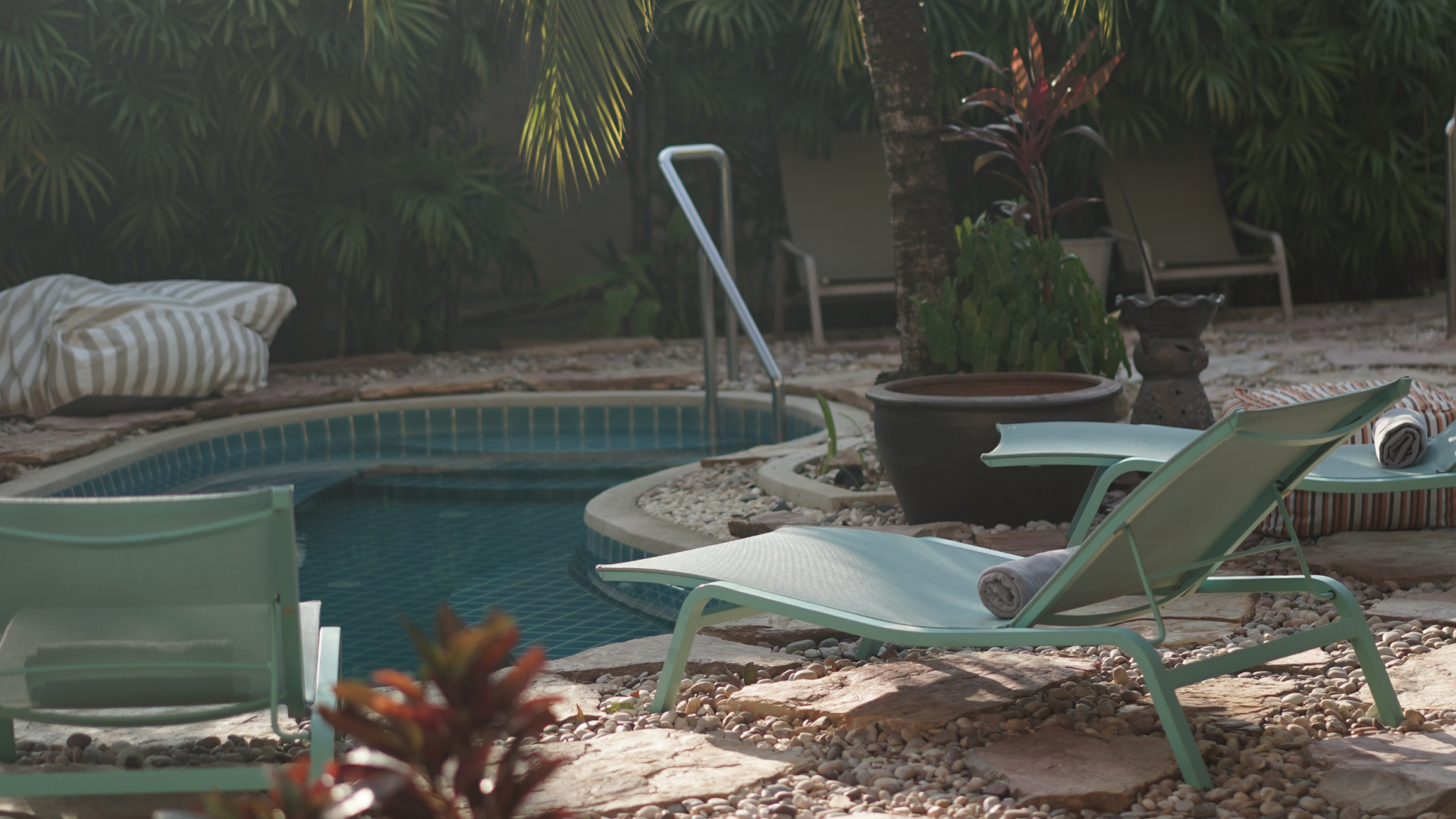
The blood vessels are
the engine of recovery.
Contrast hydrotherapy — the deliberate alternation of hot and cold water exposure — exploits the vascular system's ability to respond rapidly and dramatically to temperature change. Blood vessels are not passive pipes: they are dynamic muscular structures capable of rapid diameter change in response to thermal stimulus. By alternating heat and cold in precise sequence, contrast therapy generates a vascular pumping action that flushes metabolic waste, delivers oxygen-rich blood to recovering tissue, and stimulates the lymphatic system in ways that static temperature exposure cannot.
The sequence at Maji moves from the elevated thermal load of the sauna (vasodilation) to the cold plunge (vasoconstriction) to the hot pool (rebound dilation) and finally to the Jacuzzi (targeted mechanical pressure). Each transition amplifies the recovery effect of the one before it.
Vessels maximally dilated · Core temperature elevated
Vessels sharply constrict · Core flood initiates
Rebound vasodilation · Oxygen flood to periphery
Targeted hydro-pressure · Muscle restoration
Shock the system.
Unlock the chemistry.
The cold plunge at Maji operates below 10°C — cold enough to trigger the full suite of cold-shock biochemistry, but controlled precisely enough to ensure safety and repeatability. Entry after a sauna session creates maximum contrast: the body transitions from a state of maximal vasodilation into one of immediate, powerful vasoconstriction.
Within the first 30 seconds of immersion, norepinephrine levels in the bloodstream surge by up to 300%. This neurotransmitter cascade simultaneously elevates mood, sharpens alertness, suppresses pain, activates brown adipose thermogenesis, and triggers the expression of cold-shock proteins including RNA-binding protein 3 (RBM3) — implicated in neurological repair and cognitive preservation. The cold plunge should be approached with measured breath control: slow, nasal breathing activates the parasympathetic nervous system and prevents the cortisol spike that shallow, rapid breathing would generate.
<10°C
Target temperature
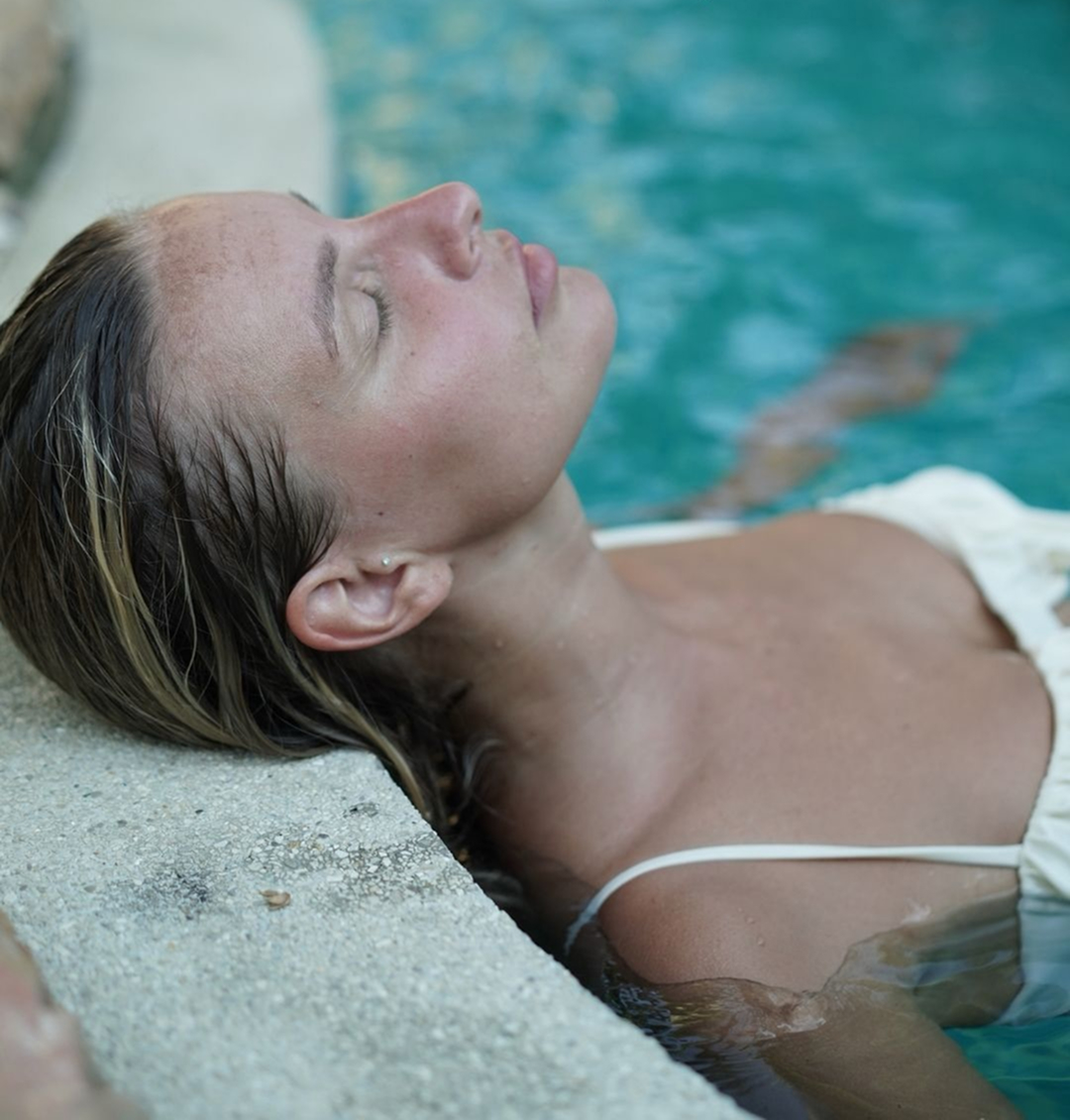
Rebound. Release.
Flood the tissue.
Moving from cold plunge into the hot immersion pool generates one of the most powerful circulatory recovery events achievable without pharmacological intervention. The peripheral blood vessels — tightly constricted by the cold — now encounter the warmth of the 38–42°C hot pool and dilate rapidly in response. The pooled, warm arterial blood that retreated to the body's core during cold exposure now floods back into the extremities, carrying oxygen, nutrients, and endorphins.
Deeply held muscular tension — particularly the residual spasm patterns that often survive sauna exposure — dissolves completely in the hot pool. The water temperature is calibrated to promote rapid smooth muscle relaxation without inducing new thermal stress. Guests frequently describe this transition as the moment the body "lets go" — a somatic release of chronic tension that precedes the deeper restoration of the hydrogen bath phase.
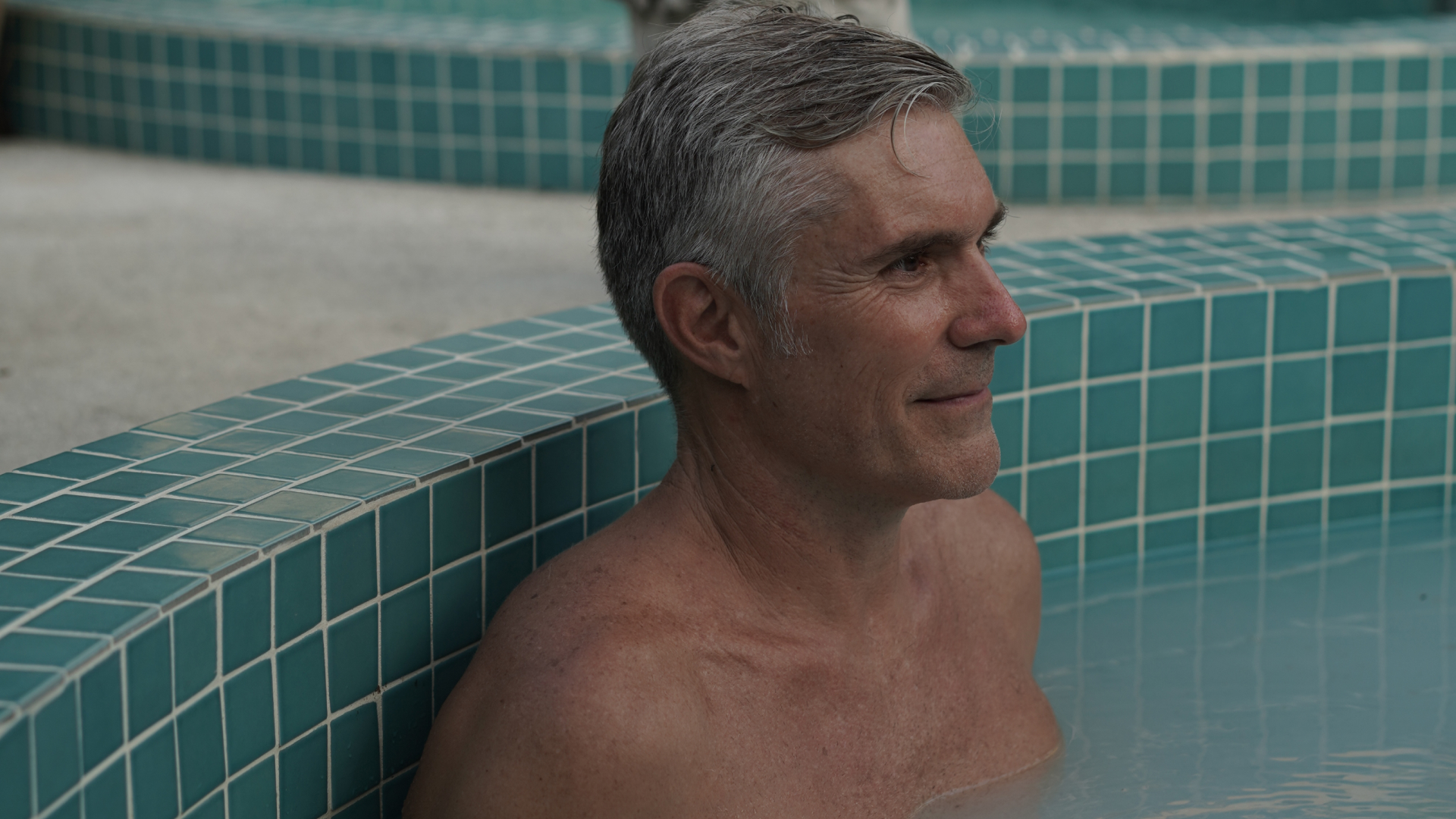
Targeted pressure.
Deep muscle release.
The Jacuzzi hydro-massage completes the contrast pool arc. Operating at 36–39°C — slightly below the hot pool temperature to maintain comfort during longer sessions — the Jacuzzi's precision hydro-jets deliver targeted mechanical pressure to major muscle groups: the lumbar spine, hamstrings, calves, shoulders, and hips.
The combination of warm water immersion and targeted hydro-jet pressure accelerates the clearance of lactic acid and metabolic waste from muscle tissue, reduces the residual micro-inflammatory response following intense training, and mechanically stimulates the lymphatic vessels adjacent to major muscle groups — promoting the drainage of inflammatory mediators that would otherwise contribute to delayed onset muscle soreness (DOMS).
The Jacuzzi session also serves as the ideal transition zone before the hydrogen bath or inhalation restoration phase — the body is warm, muscles are relaxed, and circulation is at its most receptive to the transdermal absorption of molecular hydrogen.
After contrast comes
the deepest restoration.
The contrast pool sequence prepares the body optimally for molecular hydrogen therapy — the final and most scientifically distinct phase of the Maji thermal circuit.